Contents
- 1 MetaMask vs Coinbase Wallet: Platform Overview
- 2 Browser Extension Functionality and Performance
- 3 Ethereum and Multi-Chain Support
- 4 Self-Custody and Security Features
- 5 DeFi Integration and Token Swaps
- 6 NFT Support and Web3 Features
- 7 User Experience and Learning Curve
- 8 Ecosystem Integration and Developer Support
- 9 Which Wallet Should You Choose?
- 10 Conclusion
- 11 Frequently Asked Questions
Choosing the right crypto wallet is crucial for accessing the decentralized web safely and efficiently. With the explosive growth of Web3 applications, DeFi protocols, and NFT marketplaces, millions of users need reliable browser extension wallets to interact with blockchain networks. MetaMask has established itself as the leading self-custodial Web3 wallet, while Coinbase Wallet offers an alternative approach from the popular exchange platform.
Both wallets provide access to Ethereum and other EVM-compatible blockchains, but they differ significantly in philosophy, features, and target audience. Understanding these differences helps you make an informed decision about which wallet best suits your Web3 journey. In this comparison, you’ll discover the key distinctions between MetaMask vs Coinbase Wallet, including their approaches to self-custody, browser extension functionality, ecosystem integration, and advanced features.
Whether you’re a DeFi trader, NFT collector, developer, or newcomer to cryptocurrency, this analysis will help you understand which wallet aligns with your needs for secure, efficient blockchain interaction.
MetaMask vs Coinbase Wallet: Platform Overview
MetaMask pioneered the browser extension wallet category and remains the most widely adopted Web3 wallet globally. Built by ConsenSys, MetaMask focuses exclusively on providing seamless access to decentralized applications through browser extensions for Chrome, Firefox, Brave, and Edge. The wallet follows a self-custodial model where users maintain complete control over their private keys through their Secret Recovery Phrase.
Coinbase Wallet, developed by Coinbase, operates as a separate product from the main Coinbase exchange. Unlike the custodial exchange, Coinbase Wallet is self-custodial and available as both a browser extension and mobile app. It was designed to bridge traditional crypto users from centralized exchanges into the DeFi ecosystem while maintaining familiar user experience patterns.
The fundamental difference lies in their origins and focus. MetaMask was built specifically for Web3 from the ground up, while Coinbase Wallet extends the exchange’s ecosystem into decentralized finance. This distinction influences everything from feature development to user interface design.
Browser Extension Functionality and Performance
As browser extension wallets, both MetaMask vs Coinbase Wallet offer similar core functionality, but with notable differences in execution and optimization. MetaMask’s browser extension has been refined through years of development and user feedback, resulting in a highly optimized experience for Web3 interactions.
MetaMask’s extension excels in dApp compatibility and connection reliability. The wallet automatically detects and connects to thousands of decentralized applications, from DeFi protocols like Uniswap and Aave to NFT marketplaces like OpenSea. The extension’s architecture allows for quick transaction signing and network switching between multiple EVM-compatible chains.
Coinbase Wallet’s browser extension offers solid performance but is newer to the market. It provides essential Web3 functionality with a clean, intuitive interface that may appeal to users transitioning from centralized exchanges. However, it lacks some advanced features and optimizations that MetaMask has developed over its longer development cycle.
Both extensions support hardware wallet integration with Ledger and Trezor devices, allowing users to enhance security while maintaining the convenience of browser-based access to Web3 applications.
Ethereum and Multi-Chain Support
MetaMask was designed with Ethereum as its primary focus, reflecting the blockchain’s position as the foundation of the DeFi ecosystem. This Ethereum-first approach means MetaMask offers optimized support for ERC-20 tokens, NFTs, and complex smart contract interactions. The wallet seamlessly handles Ethereum’s gas fee estimation and transaction batching.
Beyond Ethereum mainnet, MetaMask supports dozens of EVM-compatible networks including Polygon, Binance Smart Chain, Avalanche, Arbitrum, and Optimism. Users can easily add custom networks and switch between chains depending on their needs. The recent introduction of MetaMask Snaps extends this multi-chain support even further, potentially adding non-EVM chains through community-developed extensions.
Coinbase Wallet also supports Ethereum and major EVM networks, with particular strength in networks commonly used by Coinbase’s ecosystem. The wallet provides good multi-chain functionality, though it doesn’t match MetaMask’s extensive network support or the flexibility offered by MetaMask Snaps.
For users primarily focused on Ethereum DeFi and NFTs, both wallets provide excellent support. However, MetaMask’s longer development history and larger developer community result in better optimization for complex Ethereum interactions.
Self-Custody and Security Features
Both MetaMask vs Coinbase Wallet follow self-custodial principles, meaning users control their private keys and bear responsibility for wallet security. This represents a significant philosophical shift from custodial services where third parties manage your keys.
MetaMask implements industry-standard security practices with local key storage and encryption. Your Secret Recovery Phrase never leaves your device or gets transmitted to MetaMask servers. The wallet generates a new private key for each account and uses hierarchical deterministic (HD) wallet standards for key derivation. MetaMask’s open-source nature allows security researchers to audit the code continuously.
Coinbase Wallet employs similar security measures with local key storage and encrypted backup options. However, it offers additional features like cloud backup of encrypted wallet data, which some users find convenient but others view as a potential security trade-off. The wallet includes biometric authentication on mobile devices and hardware wallet integration for enhanced security.
Both wallets emphasize the importance of securely storing your Secret Recovery Phrase, as neither company can recover lost phrases or access user wallets. This self-custody model provides superior security compared to exchange wallets but requires users to take personal responsibility for their crypto security.
DeFi Integration and Token Swaps
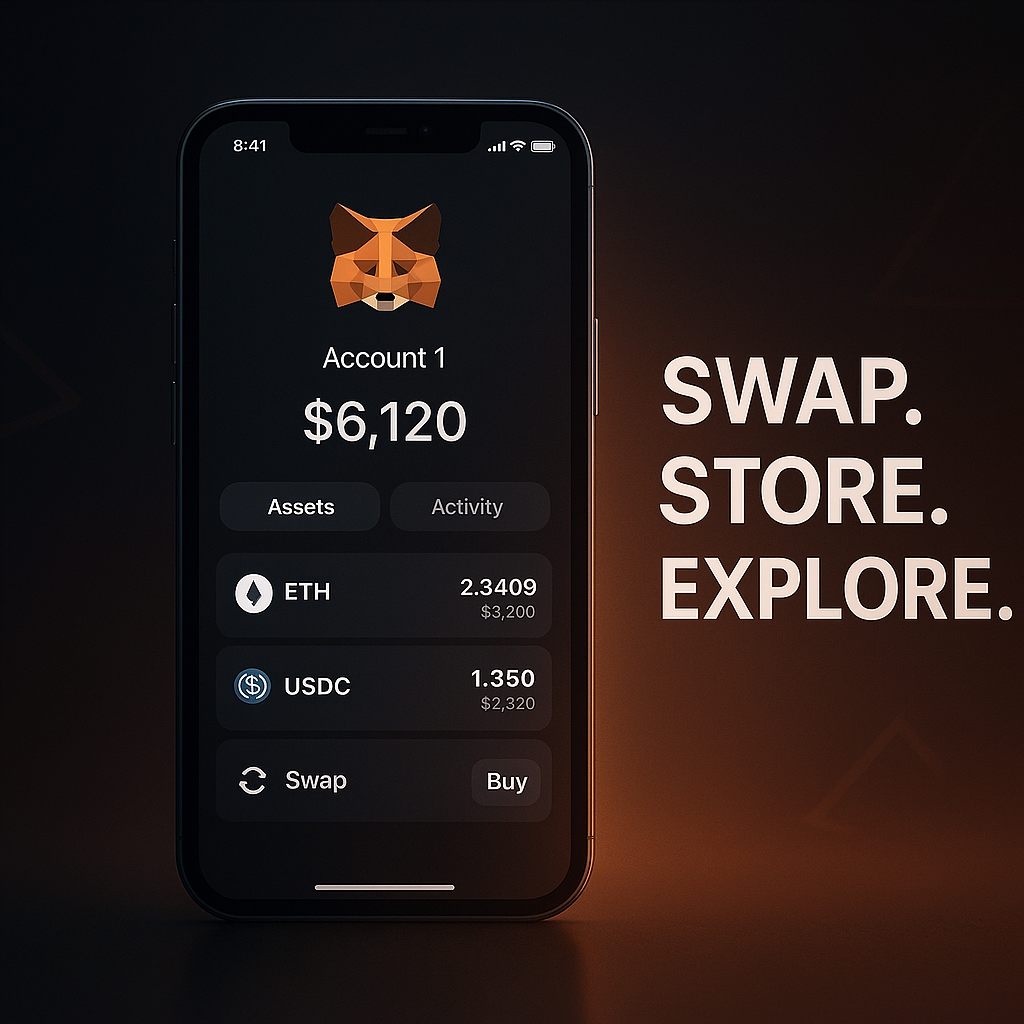
MetaMask’s deep integration with the DeFi ecosystem sets it apart as the preferred wallet for decentralized finance activities. The wallet includes built-in token swaps powered by a DEX aggregator that finds the best rates across multiple decentralized exchanges. This integration allows users to trade tokens directly within the wallet interface without visiting external websites.
The MetaMask Swaps feature supports thousands of tokens across multiple networks and automatically calculates gas fees and slippage. Advanced users can customize gas settings and transaction parameters for optimal trading strategies. MetaMask’s extensive dApp browser compatibility means seamless interaction with lending protocols, yield farming platforms, and complex DeFi strategies.
Coinbase Wallet provides basic DeFi access and includes swap functionality, though it’s less sophisticated than MetaMask’s offering. The wallet connects to major DeFi protocols and supports standard token swaps, but lacks some advanced features that active DeFi users prefer. However, its integration with Coinbase’s ecosystem provides unique advantages for users who want to bridge between centralized and decentralized finance.
For serious DeFi participation, MetaMask’s superior integration, advanced features, and extensive protocol support make it the preferred choice among experienced users.
NFT Support and Web3 Features
The growing NFT ecosystem requires wallets that can display, manage, and interact with non-fungible tokens effectively. MetaMask automatically detects and displays NFTs in user wallets, supporting various standards including ERC-721 and ERC-1155 tokens across multiple networks.
MetaMask’s NFT functionality extends beyond basic display to include interaction with NFT marketplaces, gaming platforms, and utility token projects. The wallet’s widespread adoption means virtually all NFT platforms support MetaMask connections, making it the de facto standard for NFT interactions.
One of MetaMask’s most innovative features is MetaMask Snaps, an extensibility platform that allows developers to add new functionality to the wallet. This system enables features like additional blockchain support, enhanced security tools, and custom notification systems, making MetaMask highly adaptable to evolving Web3 needs.
Coinbase Wallet offers solid NFT support with clean display functionality and marketplace integration. However, it lacks the extensive ecosystem support and advanced features that make MetaMask the preferred choice for active NFT traders and collectors.
User Experience and Learning Curve
The transition from traditional finance to self-custodial Web3 wallets requires thoughtful user experience design. MetaMask has evolved its interface through extensive user feedback, resulting in a comprehensive but sometimes complex experience. The wallet provides powerful functionality for advanced users while maintaining accessibility for newcomers.
MetaMask’s interface prioritizes functionality and provides detailed transaction information, gas fee controls, and network management options. This approach serves experienced users well but can feel overwhelming for complete beginners. The wallet includes educational resources and security warnings to help users understand self-custody responsibilities.
Coinbase Wallet emphasizes simplicity and familiarity, drawing on Coinbase’s expertise in onboarding new crypto users. The interface feels more approachable for users transitioning from traditional finance or centralized exchanges. However, this simplified approach sometimes limits access to advanced features that experienced Web3 users expect.
Both wallets require users to learn fundamental concepts like gas fees, transaction signing, and Secret Recovery Phrase management. The choice between them often depends on whether you prioritize comprehensive functionality or simplified user experience.
Ecosystem Integration and Developer Support
MetaMask’s position as the leading Web3 wallet creates powerful network effects throughout the blockchain ecosystem. Virtually every DeFi protocol, NFT marketplace, and Web3 application prioritizes MetaMask integration, ensuring compatibility and optimal user experience. This widespread adoption creates a self-reinforcing cycle where new projects integrate MetaMask first.
The wallet’s extensive developer documentation, APIs, and SDKs make it the preferred choice for blockchain developers building dApps. MetaMask’s developer tools enable sophisticated integrations and custom user experiences that leverage the wallet’s capabilities.
Coinbase Wallet benefits from Coinbase’s broader ecosystem integration, including connections to the main exchange, institutional products, and traditional finance bridges. This integration provides unique advantages for users who want to move seamlessly between centralized and decentralized finance.
However, the developer ecosystem and third-party integrations heavily favor MetaMask due to its longer market presence and larger user base. This creates better overall compatibility and feature support across the Web3 landscape.
Which Wallet Should You Choose?
The choice between MetaMask vs Coinbase Wallet depends on your specific needs, experience level, and Web3 goals. MetaMask excels as a comprehensive Web3 platform for users who want maximum functionality, extensive dApp compatibility, and advanced features like MetaMask Snaps. It’s the preferred choice for active DeFi traders, NFT collectors, developers, and users who prioritize cutting-edge Web3 capabilities.
Coinbase Wallet suits users who prefer simplified interfaces, want strong integration with Coinbase’s ecosystem, or are transitioning from centralized exchanges to self-custody solutions. It provides solid core functionality with a more approachable user experience.
Consider MetaMask if you want the most comprehensive Web3 experience, extensive dApp compatibility, advanced DeFi features, and access to innovative capabilities through MetaMask Snaps. Choose Coinbase Wallet if you prioritize simplicity, use Coinbase’s other products, or prefer a more streamlined approach to Web3 interaction.
Both wallets provide secure self-custody solutions, but MetaMask’s market leadership, extensive features, and ecosystem integration make it the preferred choice for most serious Web3 users.
Conclusion
MetaMask vs Coinbase Wallet represents a choice between comprehensive Web3 functionality and simplified user experience. While both wallets provide secure self-custodial access to Ethereum and other blockchain networks, MetaMask’s position as the industry leader offers significant advantages in terms of features, compatibility, and ecosystem integration.
MetaMask’s browser extension remains the gold standard for Web3 interaction, providing advanced features like MetaMask Snaps, sophisticated DeFi integration, comprehensive NFT support, and unmatched dApp compatibility. The wallet’s self-custodial approach, combined with extensive developer support and continuous innovation, makes it the preferred choice for serious Web3 participants.
Ready to experience the full potential of Web3? Download MetaMask today and join millions of users exploring the decentralized web with the most trusted and feature-rich crypto wallet available.
Frequently Asked Questions
Is MetaMask safer than Coinbase Wallet?
Both MetaMask and Coinbase Wallet are self-custodial wallets with similar security models. Both store your private keys locally and use industry-standard encryption. MetaMask’s open-source nature allows for continuous security audits, while Coinbase Wallet benefits from Coinbase’s security expertise. Your security primarily depends on protecting your Secret Recovery Phrase regardless of which wallet you choose.
Can I use both MetaMask and Coinbase Wallet simultaneously?
Yes, you can install and use both browser extensions simultaneously. Many users maintain multiple wallets for different purposes or as backups. However, only one wallet can be the default Web3 provider in your browser at a time. You can disable one extension temporarily when using the other, or manage them through browser extension settings.
Which wallet has lower fees for token swaps?
Both wallets use DEX aggregators to find competitive swap rates, so fees are often similar. MetaMask Swaps typically offers more liquidity sources and routing options, potentially finding better rates for larger trades. However, the actual fees depend on network congestion, trade size, and available liquidity. Both wallets display estimated fees before confirming transactions.
Does Coinbase Wallet work with all the same dApps as MetaMask?
Most major dApps support both wallets since they both implement standard Web3 protocols. However, MetaMask’s longer market presence means better optimization and testing across more platforms. Some newer or experimental dApps may support MetaMask exclusively initially. MetaMask Snaps also enables functionality that other wallets cannot replicate.
Can I import my MetaMask wallet into Coinbase Wallet or vice versa?
Yes, you can import any wallet into either MetaMask or Coinbase Wallet using your Secret Recovery Phrase. Both wallets follow standard HD wallet protocols, making them interoperable. Simply use the “Import Wallet” option and enter your 12-word Secret Recovery Phrase. Your accounts, transaction history, and token balances will appear in the new wallet.
What are MetaMask Snaps and does Coinbase Wallet have similar features?
MetaMask Snaps is an extensibility platform that allows developers to add new features to MetaMask, such as support for non-EVM blockchains, custom notifications, and enhanced security tools. Coinbase Wallet does not have an equivalent extensibility system. This makes MetaMask more adaptable to future blockchain developments and user needs.
Which wallet is better for beginners to Web3?
Coinbase Wallet may feel more approachable for complete beginners due to its simplified interface and integration with familiar Coinbase branding. However, MetaMask’s extensive educational resources, widespread adoption, and comprehensive feature set make it valuable for learning Web3 properly. Most beginners benefit from starting with MetaMask due to its universal compatibility and extensive community support.
Do both wallets support hardware wallet integration?
Yes, both MetaMask and Coinbase Wallet support integration with popular hardware wallets like Ledger and Trezor devices. This allows you to maintain the security benefits of hardware storage while using the convenience of browser extension interfaces. Hardware wallet integration provides an extra security layer for users with significant crypto holdings.
Which wallet has better customer support?
Coinbase Wallet benefits from Coinbase’s established customer support infrastructure, though support quality can vary. MetaMask primarily relies on community forums, documentation, and educational resources rather than direct customer service. Both wallets emphasize that users are responsible for their own wallet security and cannot recover lost Secret Recovery Phrases.
Can I stake cryptocurrencies through both wallets?
Both wallets allow access to staking through dApps and DeFi protocols rather than built-in staking features. You can connect to liquid staking platforms like Lido or Rocket Pool, or participate in DeFi yield farming through protocols like Aave or Compound. MetaMask’s broader dApp ecosystem provides more staking options and protocols to choose from.
Which wallet receives updates and new features more frequently?
MetaMask typically receives more frequent updates and new features due to its position as the leading Web3 wallet and larger development team. Recent innovations like MetaMask Snaps, improved token detection, and enhanced security features demonstrate ongoing development commitment. Coinbase Wallet receives regular updates but generally focuses on stability and core functionality rather than cutting-edge features.
Are there any fees for using MetaMask vs Coinbase Wallet?
Both wallets are free to download and use. Neither charges fees for basic wallet functionality like sending, receiving, or storing cryptocurrencies. However, both wallets charge small fees for their built-in swap features (typically 0.875% for MetaMask Swaps). You’ll always pay network gas fees for transactions regardless of which wallet you use.


Bookmarked this, exactly the information I needed about Web3 access. Really appreciate this guide. Thanks again! Highly recommend. Very helpful! Highly recommend. Thanks again! Great resource. Highly recommend.
Just what I needed, the FAQ section was especially helpful and informative. Thanks for the detailed explanation! Very helpful! Well done! Great resource. Very helpful! Well done! Great resource. Highly recommend.
Just what I needed, the troubleshooting section was especially helpful and informative. Info came in very handy. Very helpful! Thanks again! Well done! Very helpful! Very helpful! Well done! Highly recommend.
Very informative, your recommendations on MetaMask Swaps. Will definitely implement these. Will keep an eye out for new posts! Very helpful! Very helpful! Well done! Thanks again! Great resource. Very helpful!
Bookmarked this, your recommendations on gas optimization. Will definitely implement these. Highly recommend this resource. Well done! Highly recommend. Thanks again! Great resource. Great resource. Great resource.
Great guide! particularly useful insights on EVM chains and browser extension setup. Perfect resource for this topic. Highly recommend. Very helpful! Very helpful! Highly recommend. Highly recommend. Thanks again!
Comprehensive guide, the explanation of NFT display. Made everything much clearer. Everything explained clearly. Very helpful! Thanks again! Very helpful! Highly recommend. Great resource. Well done! Great resource.
Very informative, loved the part about MetaMask extension. Everything is clear even for beginners. Highly recommend this resource. Well done! Very helpful! Thanks again! Well done! Thanks again! Thanks again!
Very useful information, those wanting to understand Ethereum wallet better. Well explained. Everything explained clearly. Well done! Great resource. Highly recommend. Great resource. Well done! Highly recommend.
Solid information, how you covered DeFi guide. Comprehensive and clear. Will follow your recommendations. Great resource. Thanks again! Great resource. Highly recommend. Very helpful! Well done! Very helpful!
Bookmarked this, valuable information about Secret Recovery Phrase that’s hard to find elsewhere. Perfect resource for this topic. Thanks again! Highly recommend. Very helpful! Well done! Thanks again!
Thanks for the article! was looking for info about DeFi integration, found everything here. Info came in very handy. Great resource. Highly recommend. Highly recommend. Well done! Great resource. Well done!
Comprehensive guide, particularly useful insights on EVM chains and Ethereum wallet. Thanks for the detailed explanation! Great resource. Very helpful! Highly recommend. Very helpful! Well done! Highly recommend.